


Shape the Future with a Degree in Education from NSU
At Northwestern State University’s School of Education, we prepare passionate, skilled, and innovative educators who make a difference in the lives of students and communities. Whether you dream of teaching in the classroom, leading in administration, or influencing education policy, NSU offers the programs, faculty expertise, and real-world experience to help you succeed.
Our graduates are highly sought after, known for their strong instructional skills, leadership abilities, and commitment to lifelong learning. With flexible pathways, online options, and hands-on training, NSU is your partner in turning your passion for education into a rewarding career.
Why Choose NSU’s School of Education?

Comprehensive Degree Options
From early childhood education to secondary education, special education, and educational leadership, our programs are designed to meet the diverse needs of future educators. We also offer graduate degrees and certifications for those seeking to advance or specialize in their careers.

Hands-On Learning
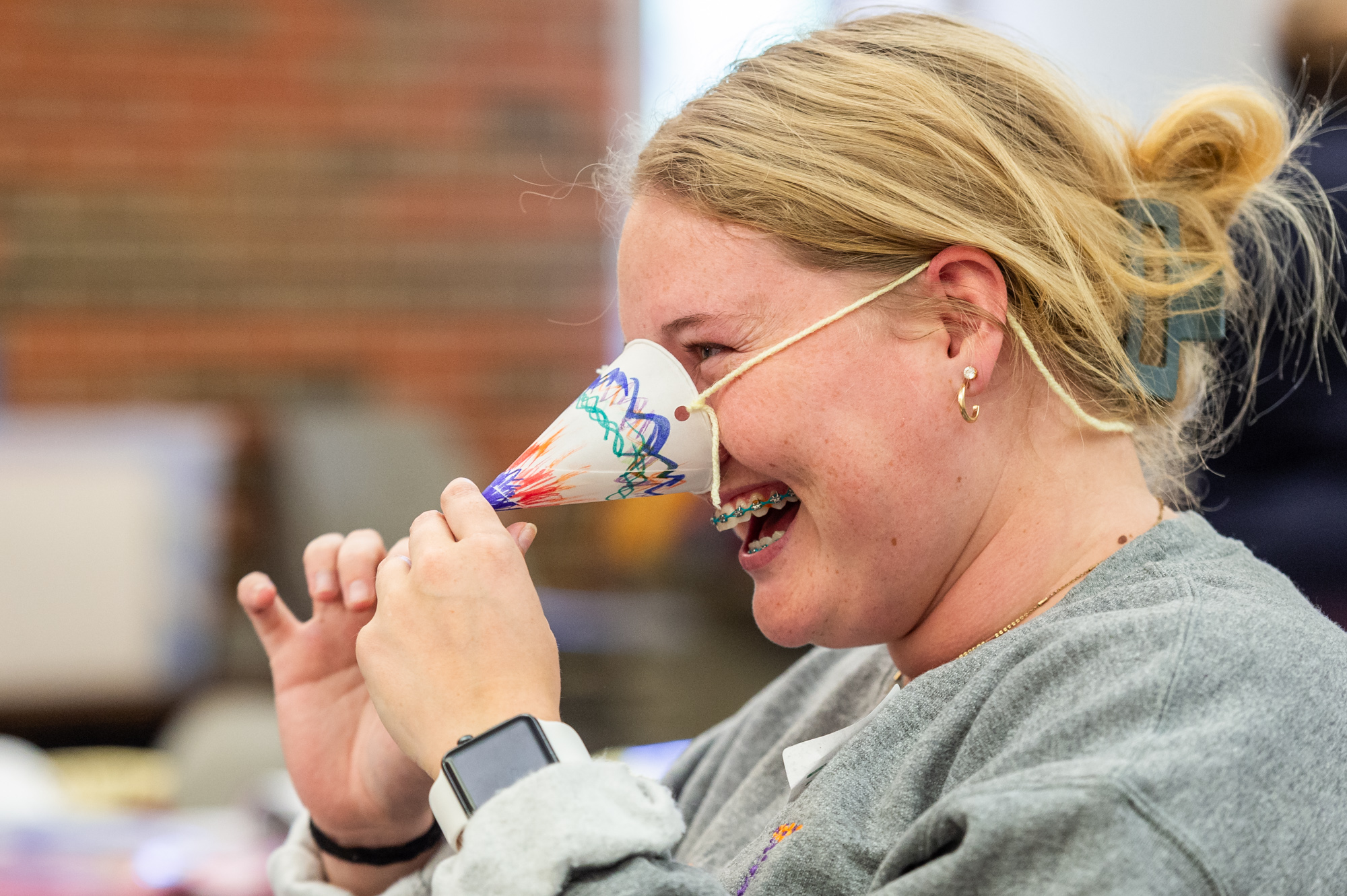
At NSU, learning goes beyond textbooks. Students gain real-world experience through classroom placements, student teaching, and partnerships with local schools. This immersive approach ensures our graduates are classroom-ready from day one.
Expert Faculty and Mentorship
Our faculty members are experienced educators and researchers who are committed to your success. They bring real-world insight into their teaching and provide personalized mentorship to guide you from your first class to your first job.

Flexible and Accessible Learning
With on-campus and online programs, NSU makes it easier than ever to earn your degree—whether you’re a traditional student or a working professional seeking career advancement.
Career Opportunities in Education
A degree from NSU’s School of Education can prepare you for careers such as:
- Elementary or Secondary Teacher
- Special Education Teacher
- School Administrator or Principal
- Curriculum Specialist
- Instructional Coordinator
- Educational Consultant
Our graduates work in schools, educational organizations, nonprofits, and policy settings—impacting lives across Louisiana and beyond.

NSU Graduates: Leading the Way in Teacher Hiring & Retention
84.6%
of NSU Education graduates are employed or engaged in continuing education within 6 months
100%
score across all Praxis assessments—Core Academic Skills, Content Knowledge, Pedagogical Knowledge, and combined—all categories included.
8,000
new teachers hired last year in Louisiana
Academic Programs
Admission to Northwestern State University is your first step—but it’s not the same as being admitted to a teacher education program. Once you’re an NSU student, you’ll need to meet specific academic requirements to enter your chosen program. This step is called Teacher Candidacy.
Undergraduate students must maintain teacher candidacy status once admitted to a teacher education program. This includes maintaining a minimum overall GPA of 2.50 on a 4.00 scale, earn a grade of C or better in all degree-applicable courses, and meet all additional program-specific academic requirements.
Note: Students majoring in Child and Family Studies do not participate in teacher candidacy.
Master of Arts (M.A.) in Counseling
Master of Arts (M.A.) in Student Affairs in Higher Education
Master of Arts (M.A.) in Adult Learning and Development
Master of Education (M.Ed.) in Curriculum and Instruction
Master of Education (M.Ed.) in Early Childhood Education
Master of Education (M.Ed.) in Educational Leadership
Master of Education (M.Ed.) in Educational Technology Leadership
Master of Education (M.Ed.) in Special Education
- Educational Specialist (Ed.S.) in Educational Leadership and Instruction
- Concentration in Educational Leadership (582I)
- Concentration in Educational Technology (582H)
- Concentration in Special Education (582G)
- Specialization in Early Intervention (Birth through 5)
- Educational Diagnostician
- Gifted
- Mild/Moderate Grades 1-5
- Mild/Moderate Grades 4-8
- Mild/Moderate Grades 6-12
- Concentration in Educational Leadership (582I)
Ed.D. in Adult Learning and Development
Concentrations:
- Community College Leadership
- Adult Learning & Workforce Development
Program Information
Dissertation Guidance
Dissertation Templates
Areas of Certification:
Areas of Certification:
If you’re pursuing certain high-demand education programs, you may qualify for the Federal TEACH Grant—offering financial assistance in exchange for a commitment to teach in high-need fields. Learn more and check eligibility at: NSU Financial Aid – TEACH Grant.
Plans of Study:
Clinical Experiences at NSU
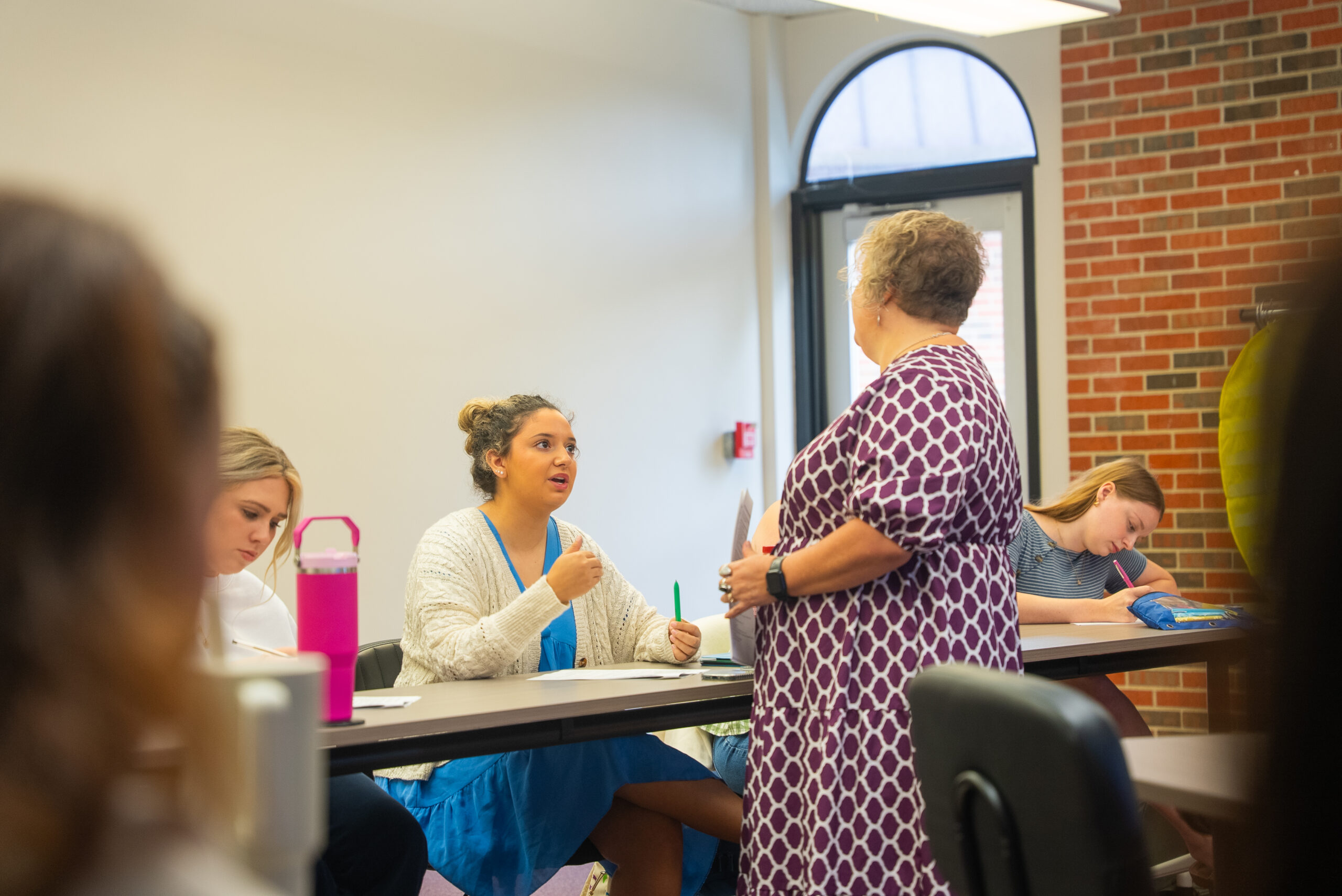
Hands-on classroom experience is at the heart of every great teacher. At Northwestern State University, our teacher education students gain real-world skills in P–12 schools from early fieldwork through residency, student teaching, and internships.
Overview:
-
Opportunities in a variety of P–12 school settings throughout professional education courses.
-
Designed to build confidence, teaching skills, and classroom readiness.
Resources for Current Candidates:
Apply the Semester Before You Begin:
Candidates are to submit an Application for Residency/Student Teaching form the semester before the anticipated beginning of enrollment in residency/student teaching.
Application deadlines: March 1 for Fall and October 1 for Spring
During pre-registration or regular registration, applicants must request registration through the . Applicants may request to enroll in additional semester hours by contacting the Director of Clinical Practice & Partnerships, Dr. Wendi O’Halloran ohalloranw@nsula.edu. Additional hours requested must be scheduled to begin after outside the school day during which residency/student teaching will occur.
Apply the Semester Before You Begin:
Candidates are to submit an Application for Internship form the semester before the anticipated enrollment in the two-semester internship.
Application deadlines: March 1 for Fall Internship and October 1 for Spring Internship
During pre-registration or regular registration, applicants must request registration through the School of Education. When applying for Residency 2/Student Teaching, applicants may request to enroll in additional hours by completing the form included with the Residency/Student Teaching application. All additional coursework must begin after the school hours for the host school.
Structure:
-
Early field experiences are assigned by course instructors.
-
Residency/student teaching/internships have a cooperating teacher and a university supervisor for guidance and evaluation.
Coaching & Mentoring Resources:
- Alternative/Differentiated Teaching – With this approach one person manages the whole group while the other works with a small group inside of or outside of the classroom. The small group instruction does not have to relate to the lesson being covered with the large group. For example, one person could take an individual student out to catch her up on a missed assignment. One might work with an individual or a small group for assessment purposes or to teach social skills. One could work with a small group for remedial purposes or extended challenge work.
- One Teach, One Assist – With this approach one person does all the teaching while the other moves around the classroom helping individuals, monitoring students’ behavior, or observing selected students to monitor for understanding. This approach can be a great asset for increasing student engagement.
- One Teach, One Observe – Much like the “one teach, one assist” approach, one person does all of the teaching while the second is responsible for observing one or more students and recording her/his observations. You might collect data on what activities engage a student or a group of students, what distracts them, how often they are actively on task, which students interact with them and why. All of this information and much more can be collected using the one teach, one observe technique.
- Parallel Teaching – Here the classroom is split in half and both instructors teach the same information or related information at the same time. This might be done because smaller groups might allow for more student involvement or there might be a particular reason for grouping some students together. It is also possible to have the two instructors teach the same concept using different techniques. For example, both teachers could be explaining the same math problem- solving lesson in two different parts of the room. If the room had two computers, each teacher could use a computer to model the use of the Internet or a new piece of software. Or each half of the class could be involved in a literature study group but using two different short stories.
- Station Teaching – Station teaching occurs when the classroom is divided into various teaching stations. The teacher and student teacher work at two stations and the other stations run independently, with a teacher aide or a volunteer. For example, three or more science stations each containing a different experiment could be organized with the teacher and student teacher working at the two stations that need the most supervision.
- Team Teaching – Team teaching occurs when two teachers serve as one. Students are generally involved in individualized or small group instruction. The lessons are taught by both teachers who actively engage in conversation, not lecture, to encourage discussion by students. Both teachers are actively involved in the management of the lesson and discipline. This approach can be very effective with the classroom teacher and a student teacher working together.
Resources:

CAEP Accountability Measures
Northwestern State University was founded as a Normal School in 1884. Since its inception, Northwestern has prided itself on being a premier provider of teacher education programs. Northwestern’s teacher and professional education programs are accredited based on the Council for the Accreditation of Education Preparation (CAEP) measures. The School of Education is also recognized by the state of Louisiana as having fully accredited programs.