
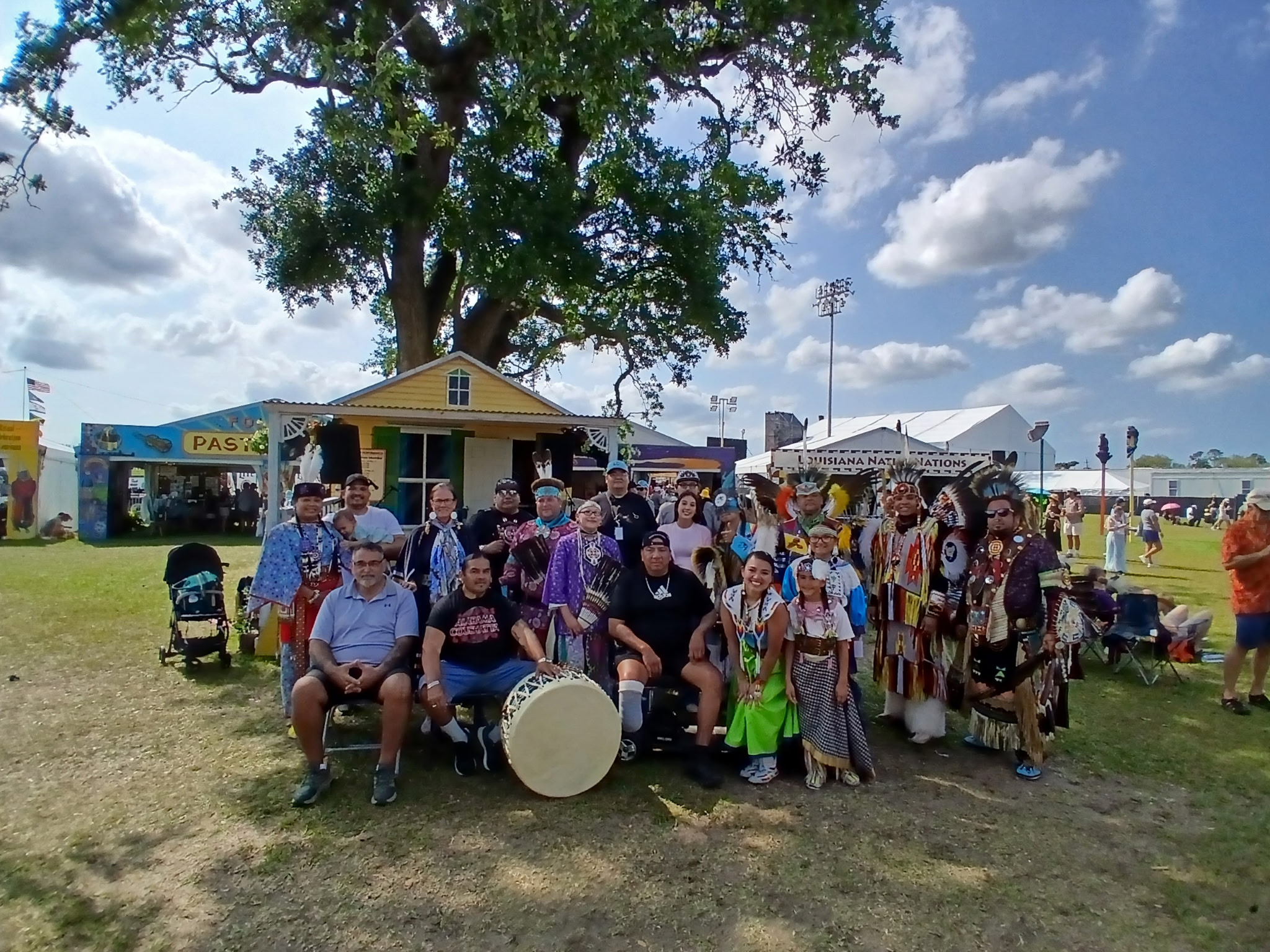

NATCHITOCHES – The Louisiana Folklife Center at Northwestern State University will present a traditional music and dance informance with Native Nations Intertribal at on Friday, July 17 at 6 p.m. the Louisiana Sports Hall of Fame and Northwest Louisiana History Museum at 800 Front St. in Natchitoches. The event will be free and open to the public.
The event will feature members of Native Nations Intertribal, who will symbolically open the 46th Annual Natchitoches-NSU Folk Festival with Native American music and dance. Native Nations Intertribal will engage in a discussion of their traditions with NSU Professor of Anthropology Dr. Hiram F. “Pete” Gregory, an expert on Southeastern Native American tribes and culture.
“We are so grateful to Native Nations Intertribal for so generously sharing their cultural knowledge with us,” said Dr. Shane Rasmussen, professor of English and director of the Louisiana Folklife Center at Northwestern State University. “Attendees at this event will have the opportunity to experience some of the most beautiful music and dance traditions in the world.”
Native Nations Intertribal is an all-Native American song and dance troupe dedicated to sharing the beauty, diversity and living traditions of Indigenous peoples across the United States. For over 25 years, it has proudly performed at the New Orleans Jazz & Heritage Festival, where the troupe honors their ancestors and educates audiences from around the world through the power of their songs, dances and stories. The group is composed of approximately 15-18 dancers and five singers, representing more than 10 tribal nations including Alabama-Coushatta, Coushatta, Southern Cheyenne, Mescalero Apache and Chickasaw, among others. Each performance is a celebration of these cultures, an opportunity to showcase the rich traditions that have been passed down through generations while building understanding and respect among all peoples.
Native Nations Intertribal will participate in the Natchitoches-NSU Folk Festival on July 18. In honor of the 2026 Festival theme, “America the Beautiful,” the Festival will feature the traditional music of the nation – blues, gospel, Cajun, Celtic, country, bluegrass and zydeco on three stages of music as well as in the Magale Recital Hall. Over 70 traditional crafts persons from throughout the state will display their crafts, handcrafting their work during the festival.
Held in air-conditioned Prather Coliseum, the Natchitoches-NSU Folk Festival features three stages of live music, Louisiana cuisine food vendors, the Louisiana State Fiddle Championship, dance lessons, music informances, narrative sessions, on-site demonstrations and more. Admission to this family friendly event is $10 for an all-day all-event pass, with children 12 and under admitted free all day. For more information, call the Louisiana Folklife Center at (318) 357-4332, email folklife@nsula.edu, or go to https://www.nsula.edu/folklife/.
The event is sponsored by the Louisiana Folklife Center and the Louisiana Sports Hall of Fame and Northwest History Museum and is in partnership with the City of Natchitoches. Support for the Festival is provided by grants from the Cane River National Heritage Area, Inc., the Louisiana Division of the Arts Decentralized Arts Fund Program, the Louisiana Endowment for the Humanities, the Natchitoches Historic District Development Commission, the Natchitoches Convention and Visitors Bureau, the New Orleans Jazz and Heritage Foundation, the Shreveport Regional Arts Council and the State of Louisiana.
The views, findings, conclusions or recommendations expressed in this program do not necessarily represent those of the Louisiana Endowment for the Humanities.