
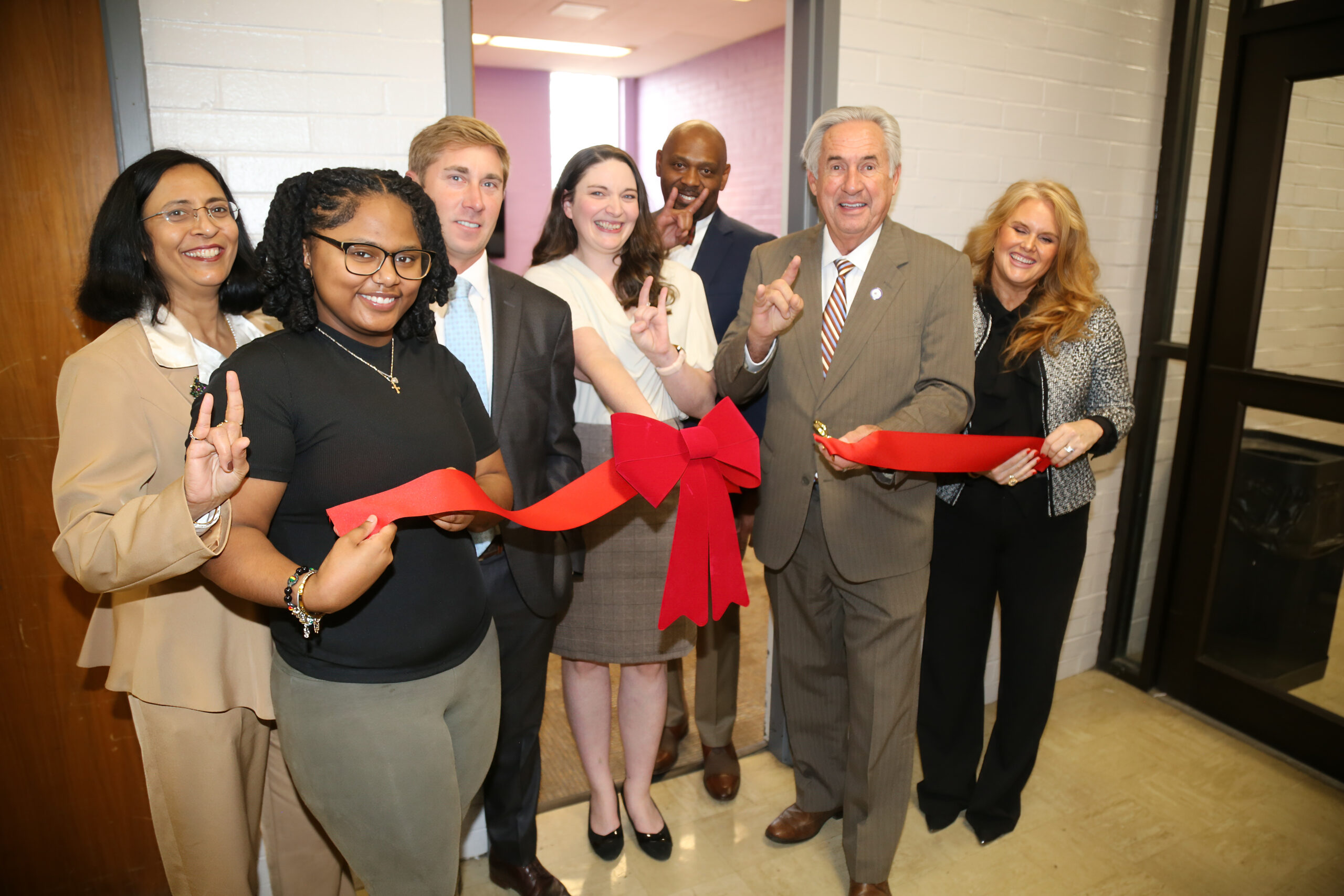

NATCHITOCHES – Northwestern State University has an extra measure of support in place for students in addiction recovery with the opening of the Demons for Recovery Lounge, a space dedicated to supporting student wellness and recovery.
A ribbon-cutting for the Demons for Recovery Lounge took place Jan. 7, bringing to fruition months of coordination to furnish a location for peer support groups, meetings, quiet study and connection.
College Recovery and Prevention Programs (CRPPs) are a growing initiative that addresses student health, wellness and success. NSU is one of nine schools in Louisiana and about 180 across the nation to have created a CRPP and is a member of the Association of Recovery in Higher Education. Demons for Recovery is housed within the Department of Psychology and Addiction Studies, which is part of the Gallaspy College of Education and Human Development.
“Since we are brand new, we get a lot of questions about what this is…is it counseling, is it a club, what do we do?” said Sarah Ebarb, CRPP program coordinator. “We will be a peer support community. We want to shift the focus from punishment to support and from stigma to understanding. We will have a space for our members to come together and collaborate for meetings and general support.”
That support can be a lifesaver for students making the transition from a home environment to a college environment. Statistics indicate that one in five college students meets the criteria for substance abuse disorder while less than 10 percent receive help.
“Students struggling with substance issues often miss class, have lower grades and withdraw from school, so our impacts are higher retention rates, higher GPAs and higher graduation rates,” Ebarb said. “Studies show that nearly 90 percent of students who are involved with a collegiate recovery program graduate. Supportive recovery environments also reduce relapse risk.”
Students will also have access to resources that improve mental health outcomes, such as referrals to mental health counselors and other professionals if they need more help.
NSU identified the need for a collegiate recovery program through national data, campus mental health trends and feedback from students and faculty. Supported by the grant from the Louisiana Board of Regents, Demons for Recovery will offer weekly peer support group meetings, educational seminars, sober social and outreach events and scholarships.
The Demons for Recovery Lounge is located in Student Union Room 313. Ebarb credited Dr. Neeru Deep, dean of the College of Education and Human Development, as well as the Demons for Recovery pilot team for their contributions to the project, Interim Department Chair Dr. Charles King and Hillary Bennett, a recent graduate of the Master’s program.
Information on Demons for Recovery is available at www.nsula.edu/crpp and by emailing crpp@nsula.edu.